





ANZUP Cancer, ANZUP
Where world class clinicians, researchers and community voices join forces against Below the Belt cancers.

BLADDER
CANCER

KIDNEY
CANCER

TESTICULAR
CANCER

PENILE
CANCER

PROSTATE
CANCER

ANZUP is the leading cancer coorperative trials group that brings together all of the professional disciplines and groups involved in researching and treating below the belt cancers and conduct high quality clinical research.
Donate to improve lives
Your Gift
Your Details
Your Payment

xx Gift of $xx

Go back
Go back

Or enter your own donation amount

ANZUP Cancer, ANZUP

What is cancer?

Cancer is a group of diseases where abnormal cells grow and divide uncontrollably. These cells can form tumours and, in some cases, spread to other parts of the body.

Not all tumours are cancerous. Some are benign and harmless, while others are malignant, meaning they can grow, spread and may require treatment.

When cancer is detected early, it is often more treatable. However, advanced cancers which is where the disease has spread can be more complex to manage. This is why research trials are so vital to help understand disease complexity.

Below the Belt Cancers:

What You Need to Know

Below the Belt cancers affect the urogenital system; the organs responsible for urinary and reproductive functions and include the kidneys, bladder, prostate, testes and penis.

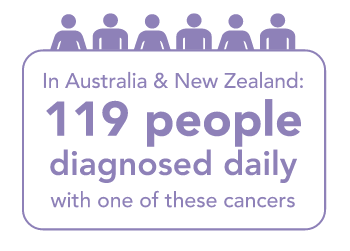
Each year, more than 38,000 Australians and 5,500 New Zealanders are diagnosed with one of these cancers.

These cancers don’t always show obvious symptoms in the early stages, which is why awareness and regular check-ups are critical. Knowing your body and acting on any changes early can make a significant difference to outcomes.

Why early detection matters

Early detection gives the best chance of successful treatment.

If something doesn’t feel right, don’t ignore it and speak to your doctor and get checked.

ANZUP Cancer, ANZUP

Below the Belt Cancers:

What You Need to Know

Below the Belt cancers affect the urogenital system; the organs responsible for urinary and reproductive functions and include the kidneys, bladder, prostate, testes and penis.

Each year, more than 38,000 Australians and 5,500 New Zealanders are diagnosed with one of these cancers.

ANZUP Cancer, ANZUP

These cancers don’t always show obvious symptoms in the early stages, which is why awareness and regular check-ups are critical. Knowing your body and acting on any changes early can make a significant difference to outcomes.

What is cancer?

Cancer is a group of diseases where abnormal cells grow and divide uncontrollably. These cells can form tumours and, in some cases, spread to other parts of the body.

Not all tumours are cancerous. Some are benign and harmless, while others are malignant, meaning they can grow, spread and may require treatment.

When cancer is detected early, it is often more treatable. However, advanced cancers which is where the disease has spread can be more complex to manage. This is why research trials are so vital to help understand disease complexity.

Why early detection matters

ANZUP Cancer, ANZUP

Early detection gives the best chance of successful treatment.

If something doesn’t feel right, don’t ignore it and speak to your doctor and get checked.

What is a Clinical Trial?

A clinical trial is a type of medical research that involves people, helping doctors find better ways to prevent, diagnose and treat disease.

Trials test new treatments, or new ways of using existing ones, to make sure they are safe, effective and improve patient outcomes. Before any new treatments or intervention becomes available, it must go through rigorous testing to ensure its safety and effectiveness.

They are a vital part of advancing healthcare, giving patients access to new therapies while helping shape the future of treatment for others.

ANZUP Cancer, ANZUP

Our Impact

2,700+ researchers and healthcare professionals in our network

39 clinical trials conducted since 2008

10,000+ patients enrolled in ANZUP trials

298 trial sites across Australia, New Zealand, and internationally

Meet the people whose lives were turned upside down

Reading about other people’s experiences of a Below the Belt cancer can be a source of support and inspiration. Read about some of our supporters, how they coped when they were first diagnosed, during their treatment, and how they are navigating their daily lives.

ANZUP Cancer, ANZUP

Juliet De Nittis faced an aggressive kidney cancer diagnosis with limited options, she joined a clinical trial – one that would ultimately save her life.

ANZUP Cancer, ANZUP

Who is Juliet De Nittis?

I am a success story. I wouldn’t be here today without the immunotherapy treatment I received through an ANZUP clinical trial.

No one ever wants to hear the words, “You have cancer.” But for Juliet, the timing couldn’t have been worse. On the eve of her daughter’s 16th birthday, she was diagnosed with kidney cancer.

Inside, she was breaking, but she held it together for her daughter. Doctors gave her only a year or two to live – at best. When more test results came in, that estimate was cut down to just eight months.

Making Headlines

Written by Edmond Kwan MBBS PhD FRACP Genitourinary Cancer Medical Oncologist, Eastern Health Senior Research Fellow & Lab Head, Monash University Cancer
ANZUP Cancer, ANZUP
ANZUP Cancer, ANZUP